An audio engineer’s ear.
A sound designer’s hands.

That is what we build: tools for musical sound design, so producers can shape sound the way they hear it, and keep it theirs.

Ask for access See what it does
Granulator Studio · closed beta · invitation only
The gap

You can hear it long before you can build it.

A starting point already close to the sound in your head.

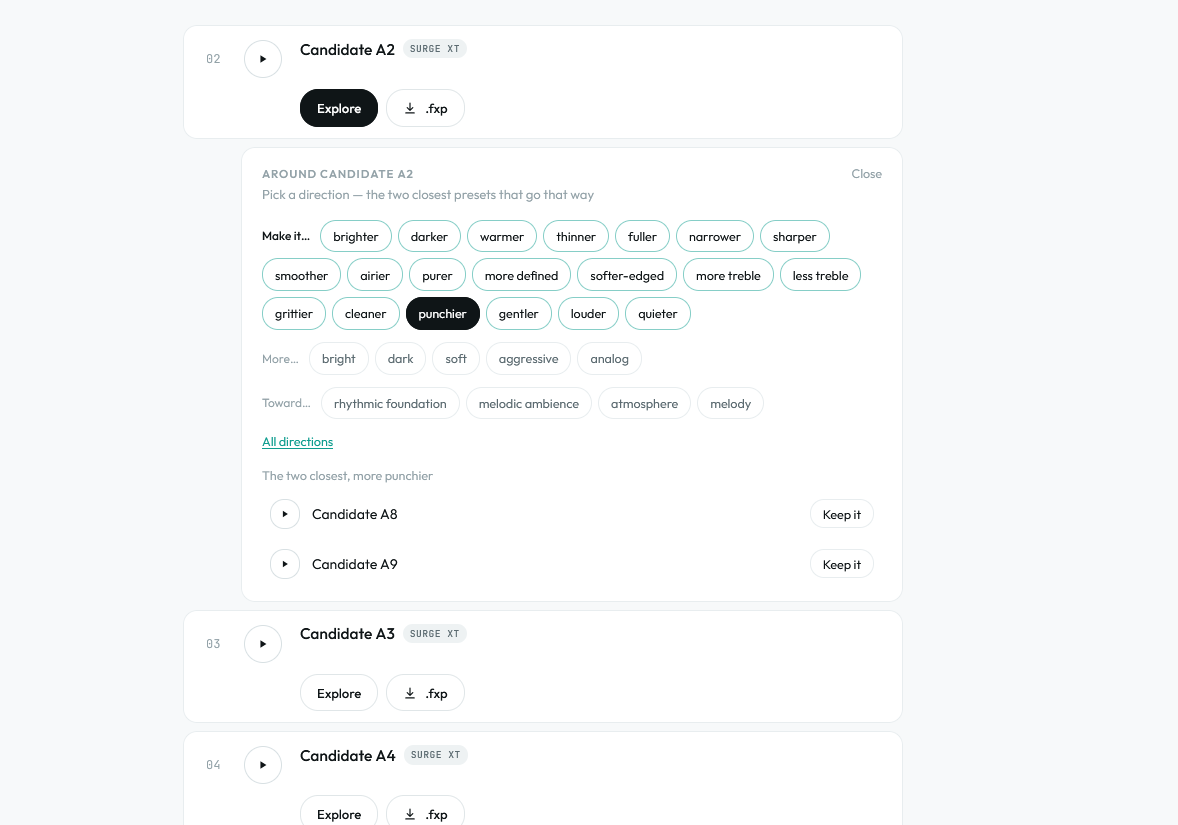
Dials for colour and texture: push it in any direction, and follow the one that surprises you.

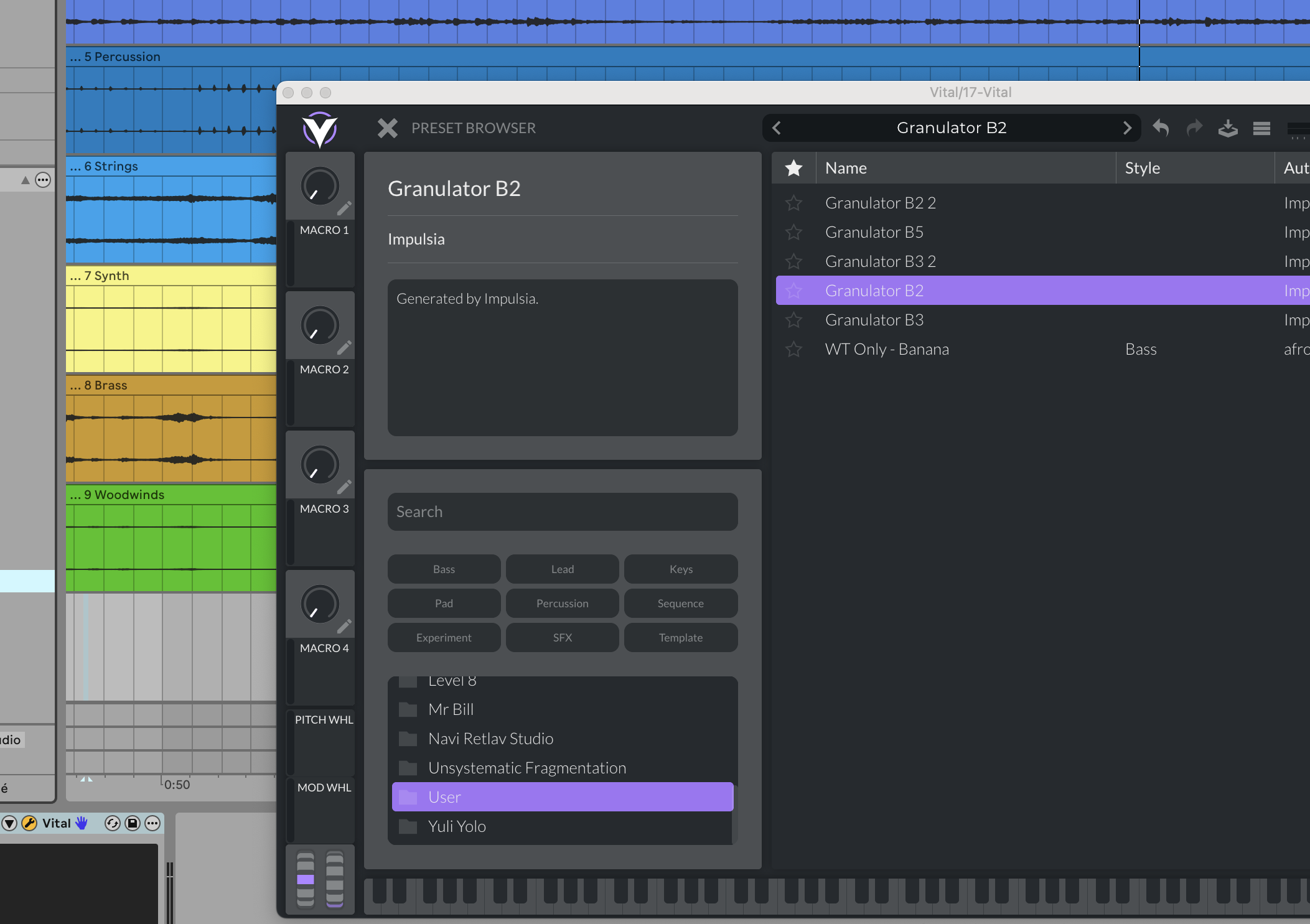
Then it’s yours: the preset opens in Surge XT, every parameter free to edit.

How it works

Say the sound. We build the preset.

Say it, or play it

Describe the sound in a few words, like “a warm analogue pad” or “a gritty sub”. Or drop in a sample you already like.

Both roads lead to the same place.

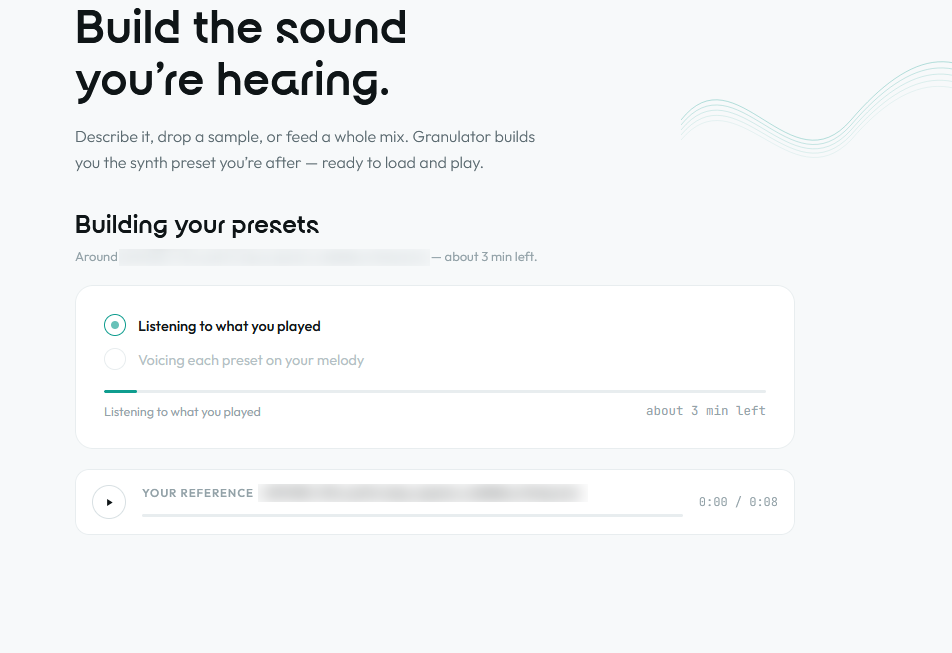
Hear it take shape

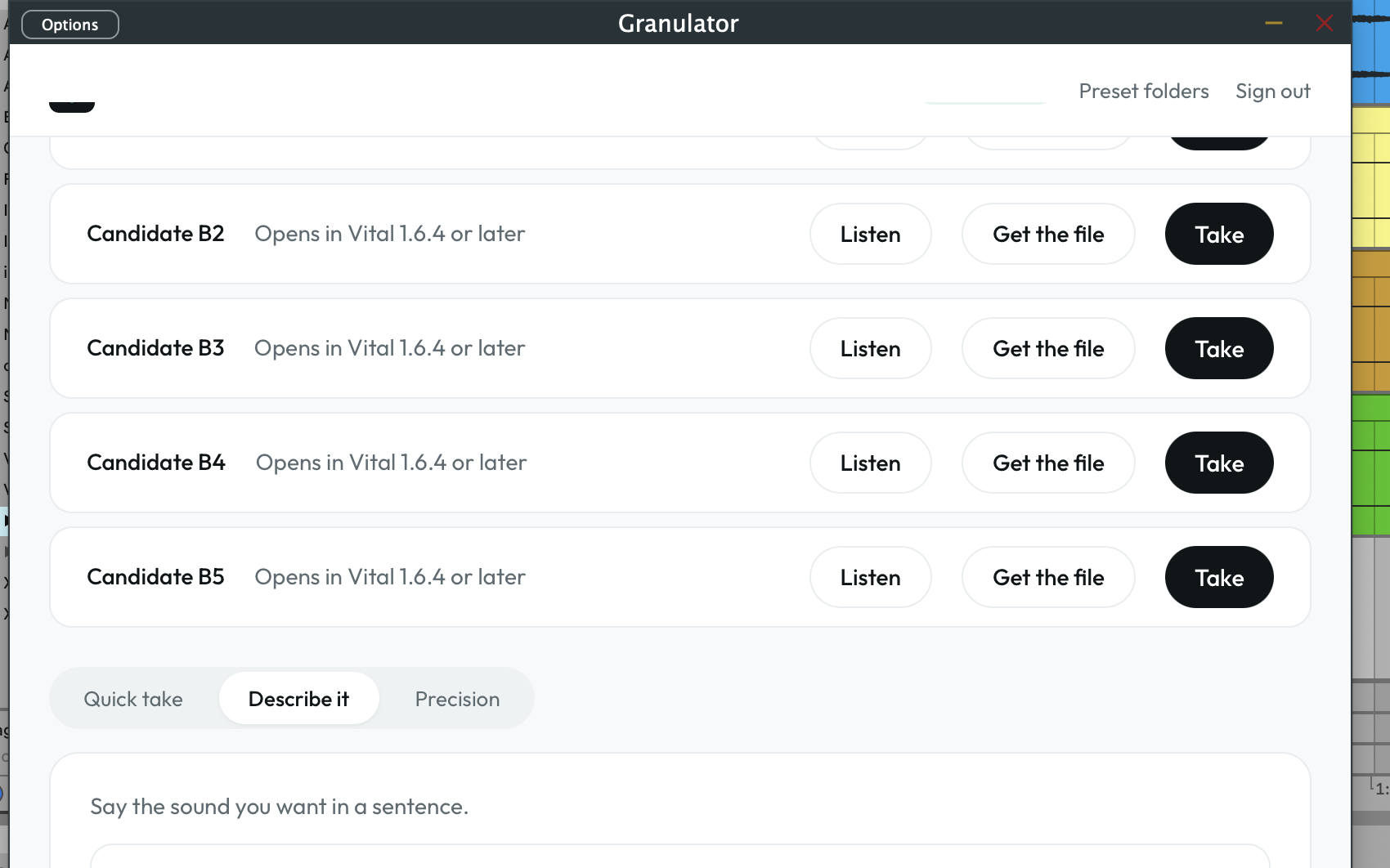
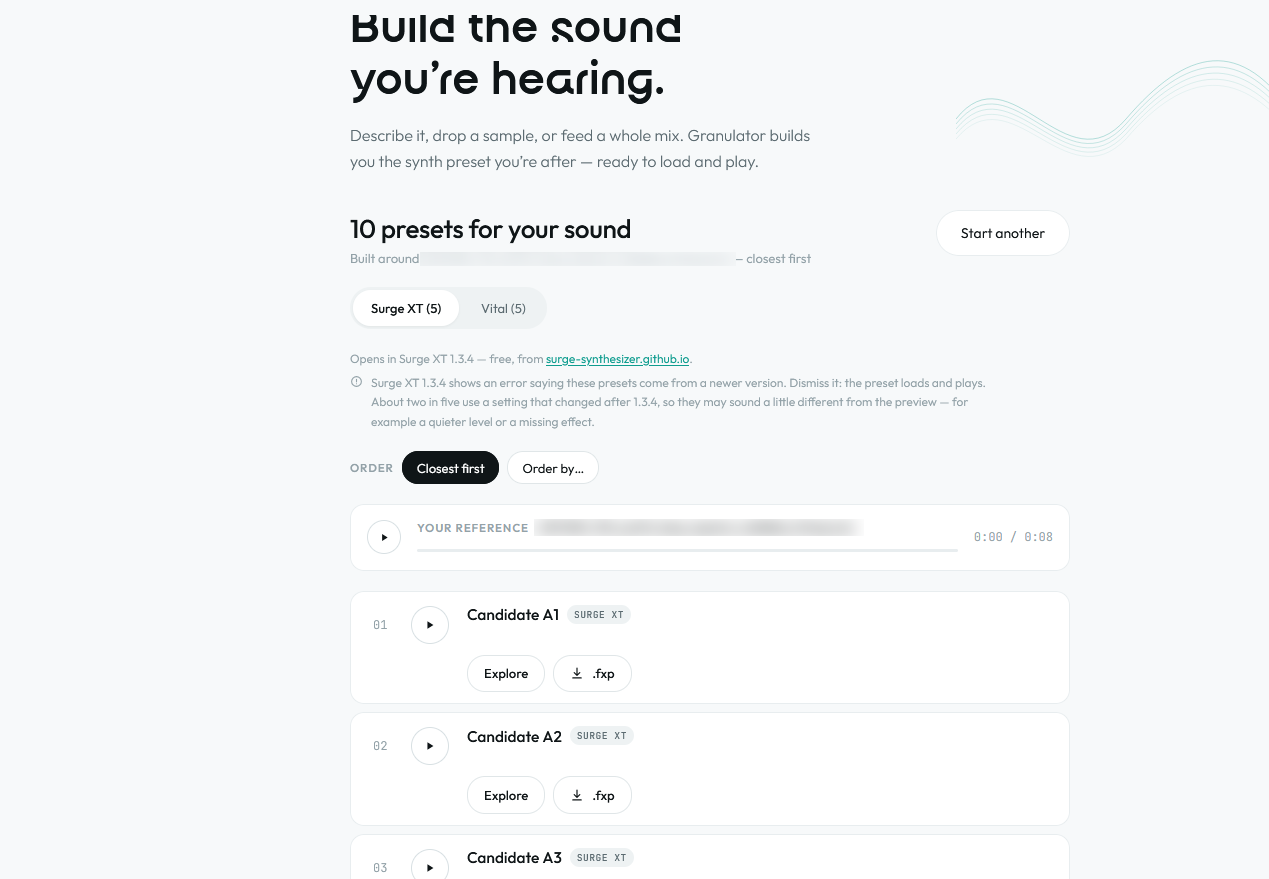
You get playable candidates, built and tuned on what you gave it.

Audition them side by side, nudge them brighter or warmer, keep the one that lands.

Take the preset

It comes out as a patch that loads straight into Surge XT.

Every parameter visible, every knob still yours to turn.

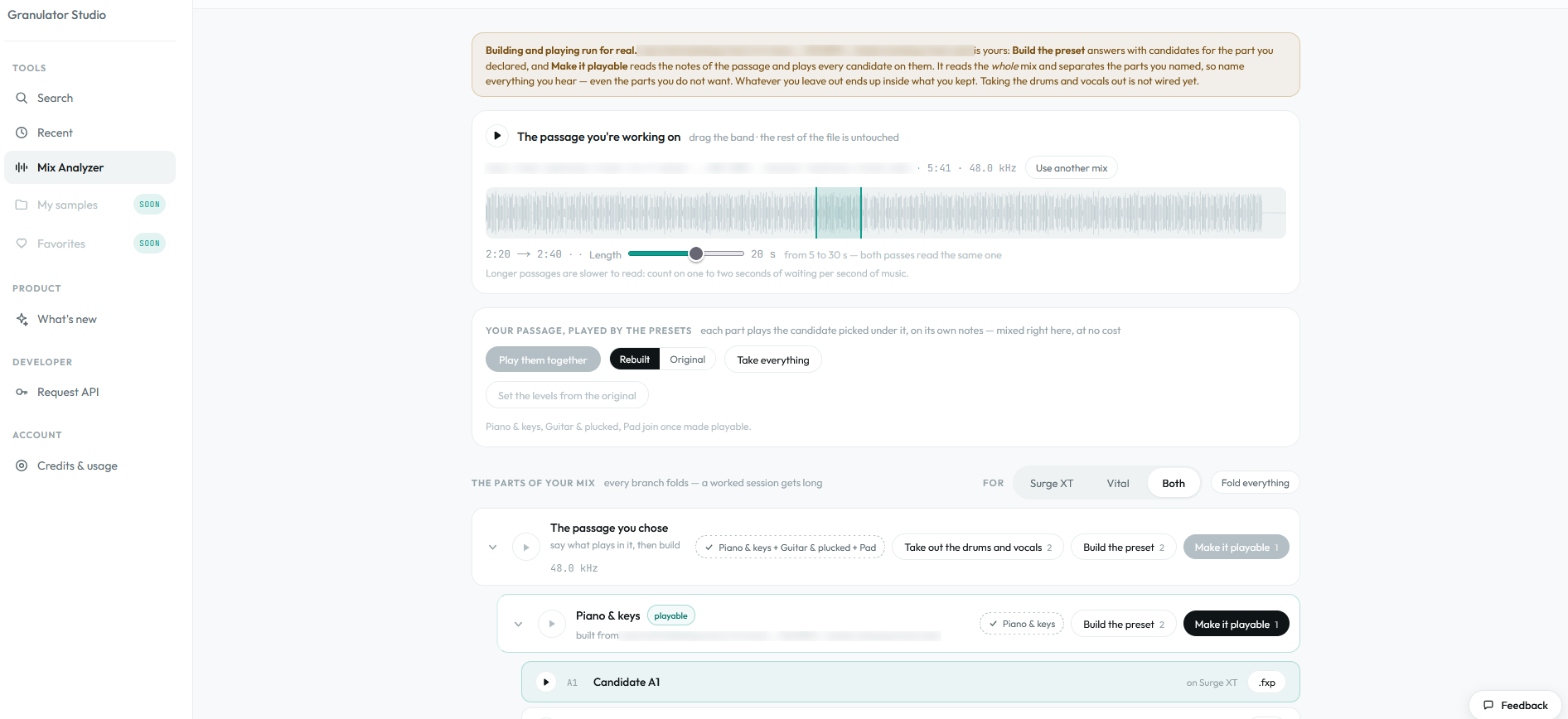
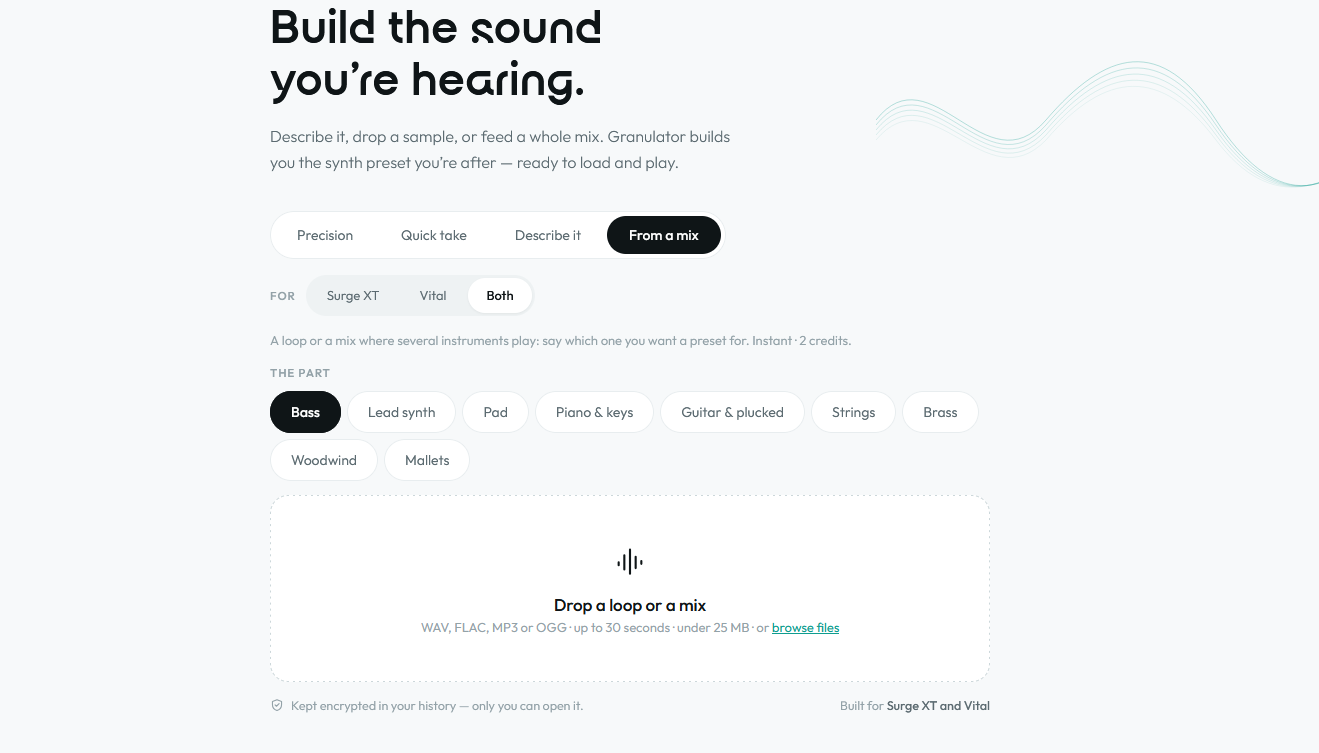
Pull a whole mix apart

Preview

Give it a finished track: it separates the parts, reads the melodic ones as notes, and builds you a preset for the voice you were listening to.

Coming to the beta.

The point

Your hands stay on the knobs.

Granulator gets you to a starting point in seconds instead of an evening.

What happens after is the part you wanted to do in the first place: every parameter is open.

The sound only becomes yours once you push it somewhere nobody else would.

That is deliberate. A tool that hands everyone the same sound makes everyone sound the same, so this one is built to get out of the way early.

Whatever you started elsewhere, this is where it starts sounding like you.

Our models

It hears like an engineer.
It thinks like a sound designer.

Our system is built around timbre similarity models.

They judge how close two sounds are in colour and texture, as precisely as a trained sound engineer would.

And they know which controls to turn to get you there.

The ear

It hears what a trained engineer hears: which instrument is playing, how it was played, what the sound is made of.

And how close it sits to the one you have in mind.

Describe it in words and it lands in the same place: a warm analogue pad written is heard like a warm analogue pad played.

The brain

It knows what to do with what it heard: which controls to move, on which instrument, to reach the sound you are after.

Once you are close, it knows which way is brighter, warmer or fuller. So you push the sound and listen, instead of hunting for the parameter.

Published at ICASSP 2026 · A spin-off of the University of Mons
See them on Hugging Face
For builders

Put it inside your own software.

The same timbre models, behind an API.

If you make a plugin, a DAW or a sample platform, your users can find and shape sound by how it sounds, without ever leaving your product.

We are opening it to a first group of partners.

Request API access

Search by ear across your own samples and presets, by how they sound, not what they were named.

Preset building from a description or a reference sound.

Any way in: a few words, a reference sample, a played phrase. Or several at once, each one sharpening the others.

A plugin is coming

Soon

The same thing, inside your DAW.

Point it at your own sample library and find the sound you half-remember owning.

Ask for access and we will tell you the day it lands.

Ask for access
With the support of
Wallonie recherche, SPW UMONS, University of Mons ISIA Lab, University of Mons BE-AIFA

Tools for musical sound design and musical sound synthesis, from a spin-off of the University of Mons, Belgium.

Product Ask for access API access Models on Hugging Face
Press & partners Yannick Molle · co-founder Gwendal Le Vaillant · co-founder [email protected]
Funded by the Walloon Region · WIN4SO © 2026 impulsia